Every time you travel abroad, purchase from a foreign online store, or send money internationally, currency conversion happens. Understanding how it works — and where costs are hidden — can save you meaningful money.
What Is an Exchange Rate?
An exchange rate is the price of one currency expressed in terms of another. For example, if 1 USD = 0.92 EUR, one US dollar buys 92 European cents. Exchange rates fluctuate constantly based on economic indicators, interest rate differentials, trade flows, and market sentiment.
The Mid-Market Rate
The mid-market rate (also called the interbank rate or spot rate) is the midpoint between the buying and selling price of a currency at a given moment. It's the "true" exchange rate with no markup — the one you see in our Currency Converter and on financial data sites.
You'll rarely get this exact rate as a retail customer. Banks and currency providers add a spread — their profit margin — on top of the mid-market rate.
Bank Spreads and Hidden Fees
When you exchange currency at a bank or airport, the rate they offer includes their markup. A bank might buy euros from the market at 0.92 and sell them to you at 0.88 — a 4% spread, all profit for the bank. On large amounts, this adds up quickly.
Additional fees to watch for:
- Foreign transaction fees: Credit cards often charge 1–3% on non-domestic purchases
- Transfer fees: Flat charges per international wire transfer
- Receipt fees: Some banks charge the recipient when receiving an international transfer
How to Get Better Exchange Rates
- Use specialist transfer services: Providers like Wise (TransferWise) and Revolut typically offer rates much closer to mid-market than traditional banks
- Pay in local currency: When using a card abroad, always choose to pay in the local currency — "dynamic currency conversion" by merchants is almost always worse
- Avoid airport exchanges: Airport bureaux de change typically offer the worst rates
- Use no-FX-fee cards: Several credit and debit cards charge no foreign transaction fees
- Compare before large transfers: For amounts over $1,000, compare multiple providers — the difference in rate can be significant
Factors That Move Exchange Rates
- Interest rates: Higher interest rates tend to attract foreign capital and strengthen a currency
- Inflation: Countries with lower inflation see their currency appreciate relative to high-inflation countries
- Economic performance: Strong GDP growth and employment tend to support a currency
- Political stability: Uncertainty and instability weaken currencies as investors seek safer alternatives
Recommended for You
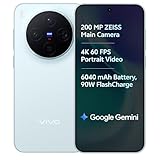
vivo X300 5G
Dimensity 9500 · ZEISS Camera · 90W Fast Charge
- ZEISS optics camera
- Dimensity 9500 chip
- 90W rapid charging
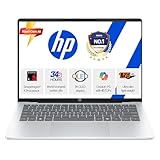
HP Next-Gen AI Laptop
Latest Gen Processor · Backlit KB · Lightweight
- AI-powered performance
- Backlit keyboard
- Ultra-lightweight build
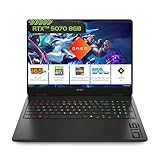
HP Gaming Laptop
RTX Graphics · High Refresh Rate · 16GB RAM
- RTX graphics card
- High refresh display
- 16GB DDR5 RAM
Disclosure: As an Amazon Associate, we may earn from qualifying purchases. Prices may vary.